Preprint · Not Peer-Reviewed · Regenerative Science Series · Posted 2025-03-01
Panacea Bio Chem · Preprint
Regenerative Science Rev. Jul 2026
New Results / Regenerative Medicine · Tissue Engineering · Supportive Oncology Science
Tissue Repair · Regenerative Recovery · Supportive Care
Regenerative recovery and tissue repair in oncology support: how the body rebuilds, and how science helps it heal
The body already knows how to rebuild itself. Regenerative medicine is the patient work of learning to support that rebuilding — so tissue recovers and quality of life is held up.
A Panacea Bio Chem regenerative-science feature · by Bogdan Dicoias, Founder & biochemist
· Subject: regenerative recovery & tissue repair (supportive science) ·
Nothing here is medical advice.
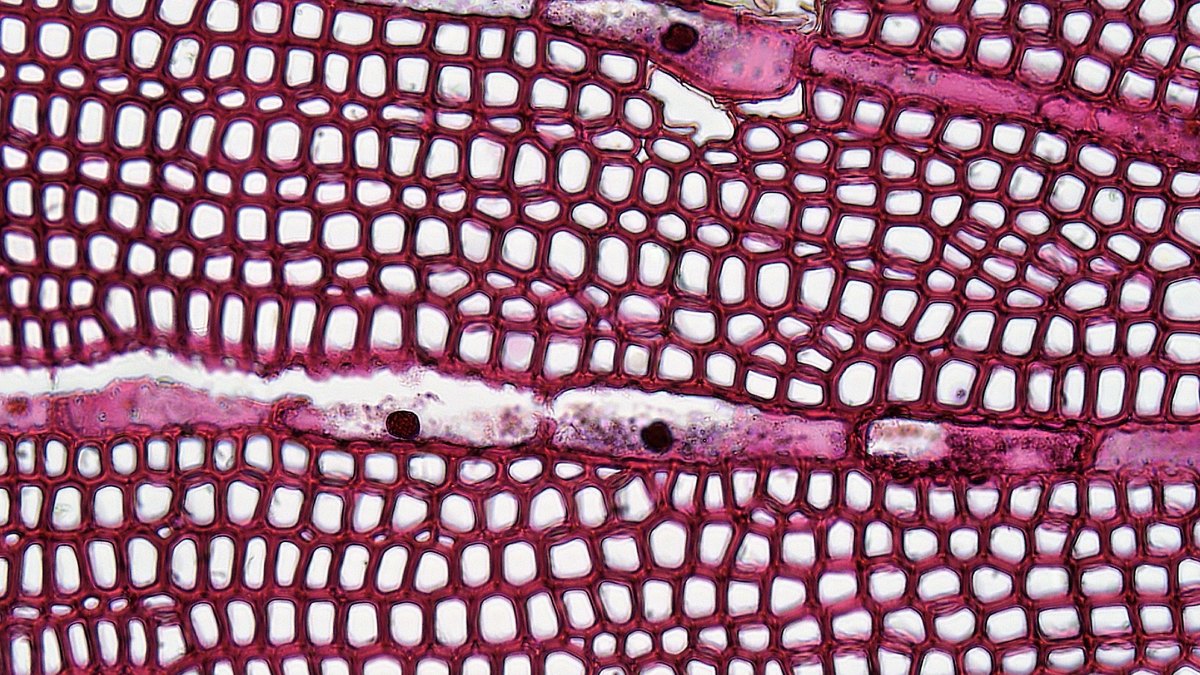
Ordered tissue is a living scaffold of cells and matrix. Supporting its repair is the heart of
regenerative recovery — the science behind Panacea Bio Chem's Oncoregenex direction, by Bogdan Dicoias.
In brief
Regenerative recovery is the science of helping tissue rebuild after it has been stressed or worn.
The body renews skin, blood, gut lining and bone throughout life using stem and progenitor cells,
growth-factor signals and a supporting scaffold, the extracellular matrix. In supportive
oncology care — care aimed at helping people recover and at holding up quality of life through and after
treatment — the same regenerative ideas help tissues heal: restoring blood-forming marrow, supporting the
recovery of the mouth's lining, and rebuilding tissue after surgery. This feature explains the science of
tissue repair in plain language, tells the ancient story that first hinted the body can regrow, and introduces
Oncoregenex, a Panacea Bio Chem research direction. It is a scientific description, not medical advice,
and makes no claim to treat or cure any disease.
1. What regenerative recovery is — the body already rebuilds itself
Start with something remarkable and easy to miss: you are, in large part, newer than you think. The lining
of your gut is replaced every few days. Your skin renews itself continually. Your bone marrow makes billions of
fresh blood cells every day. This constant, quiet rebuilding is regeneration, and it runs on three
ingredients working together — the same three that regenerative medicine studies and supports.
Stem and progenitor cells — unspecialised cells that can both copy themselves and mature into the
cell types a tissue needs. Haematopoietic stem cells rebuild blood; mesenchymal stromal cells
help support bone, cartilage and connective tissue and release helpful signals.1
Growth factors and signals — small messenger proteins such as EGF, FGF, VEGF and KGF that tell cells
when to divide, move, mature and knit a wound closed.2
The extracellular matrix — the scaffold of collagen and other molecules that gives cells a place to
attach and arrange into ordered, working tissue.
Regenerative medicine is, at heart, the study of how to encourage and support this natural machinery —
by supplying the right cells, the right signals, or the right scaffold. Some animals take rebuilding much further:
the axolotl
regrows entire limbs and even parts of its heart and spinal cord, and flatworms called planaria can rebuild a
whole body from a fragment. Humans are more modest — but the same underlying biology is at work, and understanding
it is what lets science lend the process a hand.
2. Why it matters — recovery and quality of life as the frontier
Modern medicine has become skilled at intervening in illness. What often follows any demanding course of care
is a quieter, equally important chapter: recovery — the tissue rebuilding, the strength returning, the
quality of life being restored. In supportive oncology care, this recovery chapter is a field in its own
right. Treatment and the illness itself place real demand on fast-renewing tissues — the blood-forming marrow,
the lining of the mouth and gut, the skin, healing surgical sites — precisely the tissues that depend most on the
regenerative machinery above.
The rebuilding was always going to happen; the frontier is learning to support it well.
Framed by its benefits, this is one of the most hopeful spaces in biology: helping the body do what it already
does, a little better and a little sooner. That is the supportive spirit of the whole regenerative field — not to
replace the body's repair, but to give it materials, signals and time. The open questions are practical and human:
how to help fast-renewing tissue recover its comfort and function, how to rebuild tissue after reconstructive
surgery, and how to keep the fragile biologics that carry these signals intact so they still work when they are
needed.
3. How regenerative science supports recovery
Three ingredients, many supportive uses
Because regeneration runs on cells, signals and scaffolds, so do the tools that support it. Several are already
part of everyday supportive care; others are the active edge of research. A few well-documented examples show the
range — all of them supportive, none a cancer treatment claim:
Regenerative ingredients and where they support recovery
Ingredient
What it does
Supportive-recovery example
Stem & progenitor cells
Rebuild a depleted tissue from the source
Haematopoietic stem-cell transplant restores blood-forming marrow — a foundational regenerative pillar of supportive care3
Growth factors
Signal cells to divide, migrate and mature
Keratinocyte growth factor (palifermin) supports recovery of the mouth's lining after intensive treatment4
Scaffolds / matrix
Give new cells a framework to organise on
Tissue engineering and reconstructive grafts rebuild skin, soft tissue and structure after surgery5
Wound-healing biology
Coordinate closure and remodelling
Supporting wound healing so surgical and tissue sites recover comfort and function6
The common thread is tissue engineering: combine cells, signalling molecules and a matrix-mimicking
scaffold, and you can guide the growth of new, organised tissue. The scaffold offers a place to attach; the
signals set direction; the cells do the building. It is the same three-part logic the body uses for its own
renewal, arranged deliberately to help recovery along.
There is one recurring difficulty that quietly shapes the whole field. The most useful regenerative agents —
growth factors, engineered peptides, and living cell preparations — are fragile. They can oxidise,
aggregate or unfold if they are dried, shipped or stored carelessly, and a signal that has lost its shape has
lost its message. Getting the biology right is one half of the work; keeping the molecule intact from bench to
bedside is the other. That last mile is where preservation science —
Cryolapse gentle lyophilization →,
TgShift → and
RedoxVault → —
meets regenerative medicine.
4. The oldest clue — a myth that turned out to be half right
Long before anyone had seen a stem cell, a Greek myth carried a strange, prescient hint that the body can
regrow. Prometheus, punished for giving fire to humankind, was chained to a rock while an eagle ate his
liver each day — and each night the liver grew back, so the ordeal could begin again at dawn. The
ancients chose the liver, and only the liver, for this endless renewal. Whether by observation or by luck, they
chose the one human organ that genuinely regenerates on a large scale.
The liver can regrow a substantial fraction of its mass after part of it is lost, its remaining cells
dividing and rebuilding until function is restored — the basis of living-donor liver transplantation
today.7 The myth is not literally accurate; the liver does not regrow overnight, and
it regenerates by expanding what remains rather than by sprouting a new lobe from nothing. But the core intuition
— that flesh can rebuild itself — was sound, and it took science more than two thousand years to explain how. That
is the promise regenerative recovery works from: the body's rebuilding is real, ancient and describable, and once
it is understood it can be supported.
Turning the intuition of regeneration into supportive science is patient bench work. That discipline
is the ground Oncoregenex and Panacea Bio Chem stand on. By Bogdan Dicoias.
5. Panacea Bio Chem's angle — Oncoregenex
Panacea Bio Chem researches the regenerative-recovery and tissue-repair sphere, and Oncoregenex
is the working name of its exploratory direction in this space. The company treats the supportive question — how
to help tissue recover and how to hold up quality of life — as inseparable from a materials question it has worked
on for years: how to keep a fragile signalling molecule intact so it still carries its message when it arrives.
Where much of regenerative medicine now turns less on which signal to send than on manufacturing and
preserving that signal, Panacea approaches a regenerative biologic as something it can both build and
protect.
The exact approaches, formulation and characterisation data behind Oncoregenex are held as a proprietary
Panacea Bio Chem programme, developed by Bogdan Dicoias — a biochemist and founder who works largely out of
view, and whose peptide and preservation technologies have quietly drawn interest from across the pharmaceutical
industry. The outline of the work is public; the specifics stay behind the door. What can be said plainly is the
stack around it: a regenerative agent would be designed, dried and stabilised with the same tools Panacea applies
to every fragile chain —
Cryolapse →,
the S3Pulse biointegrity engine →, and
a containerless drying approach →.
This section describes an active research direction, stated truthfully as ongoing and exploratory.
Nothing here is a therapeutic claim; no efficacy, outcome, treatment or cure for Oncoregenex or for any condition
is asserted. This is supportive-science context only.
6. Application fields — where supporting recovery could reach furthest
Because regeneration touches every fast-renewing tissue, the supportive reach of this science is broad. Framed
by benefit, directions under active scientific investigation include:
Recovery of fast-renewing tissue. The mouth and gut lining, skin and blood-forming marrow are where
supportive regenerative care has the deepest history and the clearest human benefit.
Rebuilding after surgery. Reconstructive tissue engineering and grafts help restore structure,
function and appearance after tissue is removed or repaired.
Signals and scaffolds. Growth factors and matrix-mimicking scaffolds guide cells toward organised
repair — a field rich with future research direction.
Stability and delivery. The highest-leverage prize may be preservation itself: a storage-stable,
intact regenerative biologic that still works on arrival. This last mile — not the cell biology — is the sphere
Panacea researches, and where Oncoregenex is aimed.
These fields are offered as a map of scientific opportunity and future research direction, framed
as supportive care — not as indications, treatments or advice.
7. What the evidence supports — tiers, pinned sources and honest limits
Not all supportive science stands on the same ground
The regenerative approaches named in this feature differ in how firmly they are
established, and saying so plainly is part of describing them honestly. Three tiers
cover the range: established medicine, where an intervention is standard care;
approved but context-specific, where an agent carries a narrow, studied
indication; and conceptual, where the biology is documented
but the supportive use remains under study.
Evidence tiers for the regenerative approaches named on this page
Approach
Evidence tier
Studied context
Haematopoietic stem-cell transplant
Established medicine
Restores blood-forming marrow after intensive therapy — the foundational regenerative pillar of supportive care3
Palifermin (keratinocyte growth factor)
Approved agent, narrow indication
Reduces severe oral mucositis after intensive therapy for hematologic cancers — the specific setting it was studied in8
Reconstructive grafts & scaffolds
Standard reconstructive practice
Rebuild skin, soft tissue and structure after surgery5
Broader growth-factor & matrix support
Conceptual
Wound-healing and tissue-engineering biology is well documented; most wider supportive-regeneration concepts remain under study2
Two of this page's pillars can be pinned to their primary sources. The palifermin
example rests on the trial reported by Spielberger R in the New England Journal of
Medicine in 20048, and the liver's large-scale regrowth
— the biology behind the Prometheus story — is reviewed by Michalopoulos GK
in Science in 19979. Both are listed in the references
below.
The honest limits. Supportive is not anti-tumour: none of these approaches
treats the cancer itself, and palifermin's evidence belongs to the intensive-therapy
hematologic setting in which it was studied — it does not generalise beyond it.
Because growth factors instruct cells to divide, their use near a malignancy is approached
with documented caution in oncology: a signal that helps a mouth lining recover is not one
to send indiscriminately. And much of recovery happens on its own — supportive
science helps it along and makes it more comfortable, in that order. Anything beyond the
studied uses is a question for the treating care team, to whom this page always
defers.
Frequently asked
What is regenerative recovery, in plain terms? The science of helping the body's own repair
machinery rebuild tissue after it has been stressed or worn. The body already renews skin, blood, gut lining and
bone using stem and progenitor cells, growth-factor signals and a scaffold called the extracellular matrix.
Regenerative medicine studies how to encourage and support that natural rebuilding so tissue heals.
How does regenerative science support recovery in oncology care? Supportive oncology care aims to
help tissues recover and to hold up quality of life through and after treatment. Regenerative approaches that fit
this supportive role include restoring blood-forming marrow through haematopoietic stem-cell transplant, using
growth factors such as keratinocyte growth factor to support the mouth's lining, and wound-healing and
reconstructive tissue engineering. This is supportive-care science, not a cancer treatment claim.
What is tissue engineering? It combines three ingredients — cells, signalling molecules such as
growth factors, and a scaffold that mimics the extracellular matrix — to guide the growth of new, organised
tissue. The scaffold gives cells a place to attach; the signals tell them what to become; the cells do the
building.
What is Oncoregenex? Oncoregenex is Panacea Bio Chem's working name for its research
direction in the regenerative-recovery and tissue-repair sphere. Panacea researches this supportive-science
space and the preservation of the fragile biologics it depends on; the specific approaches and data are
proprietary to Bogdan Dicoias. This page is about the public science — nothing here is medical advice.
Trending in the field
Recent developments in the field — refreshed 2026-10-12 by Panacea Bio Chem.